
Poly Mailer Types Guide for Malaysian E-commerce 2026
May 22, 2026
Packaging 101: Beginner’s Guide to Custom Food Packaging
May 22, 2026
Food Packaging in Malaysia 2026: Complete Guide for Food Entrepreneurs

The food packaging industry in Malaysia is evolving rapidly. From new food safety regulations to consumer demand for eco-friendly options, staying informed is essential for any food brand launching or growing in 2026.
This guide covers everything Malaysian food entrepreneurs need to know about food packaging — materials, regulations, costs, and emerging trends.
Understanding Food Packaging Regulations in Malaysia
Before choosing any packaging for food products sold in Malaysia, you must understand the regulatory requirements:
Mandatory Certifications
- SIRIM Halal Certification — Required for Muslim consumers. Essential for selling in major retail chains and export to Muslim-majority markets.
- Food Grade Certification — Packaging must be certified as safe for direct food contact. Materials like BPA-containing plastics are restricted.
- MS 979 / MESTI Compliance — Malaysia’s food premises and food safety standards that apply to packaging used in licensed food businesses.
Labeling Requirements
All packaged food sold in Malaysia must comply with the Food Act 1983 and Food Regulations 1985. Key labeling requirements include:
- Product name and description
- Net weight/volume
- Ingredient list (in descending order)
- Nutritional information
- Manufacturer/distributor details
- Halal status (if certified)
- Batch number and expiry date
Choosing the Right Food Packaging Material

Flexible Packaging vs Rigid Packaging
Most modern food brands choose flexible packaging (pouches, bags, film) over rigid options (jars, cans, boxes) because:
- 📦 Lower shipping cost — flexible packaging is lighter and ships flat
- 🛒 Better shelf presence — stands upright, takes less shelf space
- ♻️ More eco-friendly — less material used, lower carbon footprint
- 💰 Lower unit cost at smaller quantities
Common Food Packaging Materials in Malaysia
| Material | Best For | Barrier Properties |
|---|---|---|
| OPP/CPP (BOPP) | Snacks, dry foods, candy | Basic moisture barrier |
| PET/PE | General food, frozen goods | Good moisture + moderate O2 |
| Aluminium Foil Laminate | Premium food, coffee, pharma | Excellent — full barrier |
| Nylon/PE | Vacuum, frozen, sharp products | High puncture resistance |
| EVOH Barrier | High-end food, meat, cheese | Superior O2 barrier |
| Retort Structure | Ready-to-eat meals, pet food | Full barrier + sterilizable |
Popular Food Packaging Types in Malaysia
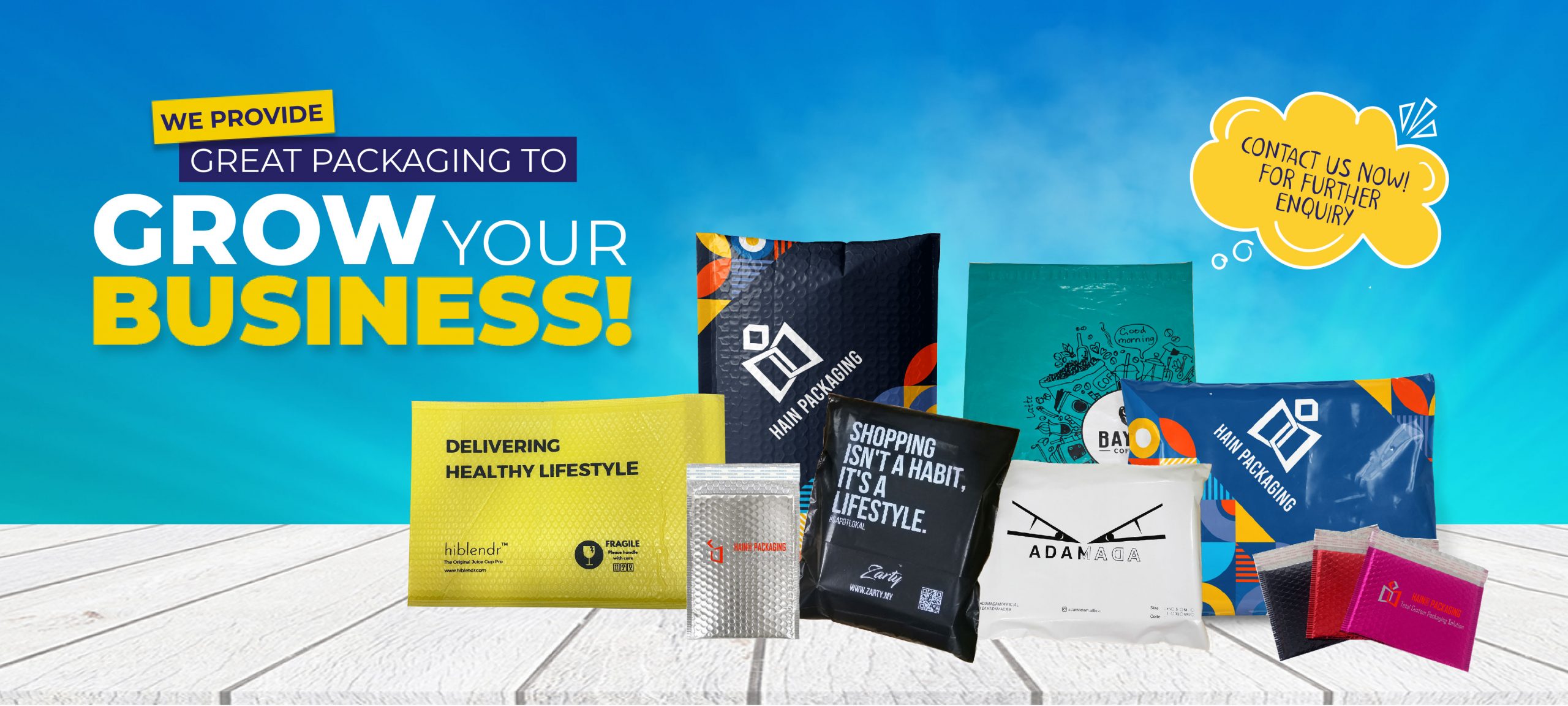
Stand Up Pouches
The #1 choice for Malaysian food brands in 2026. Perfect for: coffee, tea, snacks, sauces, dried food, frozen food, and more. Features a bottom gusset that allows the pouch to stand upright on retail shelves.
Ziplock / Slider Bags
Resealable bags ideal for products consumed over multiple sittings: nuts, crackers, cheese, frozen items. Keeps food fresh between uses — a strong selling point for consumers.
Retort Pouches
For shelf-stable food that doesn’t require refrigeration. Common for ready-to-eat meals, curry pastes, soups, and pet food. The retort process sterilizes the food inside the sealed pouch.
Spout Pouches
The fastest-growing packaging format in Malaysia’s food market. Used for: sauce sachets, baby food, drink pouches, cooking oil. Lightweight, convenient, and leak-proof.
Sachet Packaging
Single-serve sachets remain hugely popular in Malaysia for: instant coffee, curry powders, gravies, shampoo, and condiments. Affordable and convenient — perfect for price-sensitive consumers.
Food Packaging Cost Guide (Malaysia 2026)
Packaging costs vary widely based on material, print method, quantity, and customisation. Here are indicative price ranges:
| Packaging Type | MOQ | Indicative Price Range |
|---|---|---|
| Stock poly bag (no print) | None | RM 0.10–0.30/piece |
| Custom-printed stand up pouch | 3,000 pcs | RM 0.60–2.50/piece |
| Custom ziplock bag | 3,000 pcs | RM 0.50–1.80/piece |
| Retort pouch | 5,000 pcs | RM 1.20–4.00/piece |
| Spout pouch | 3,000 pcs | RM 0.80–3.00/piece |
| Custom poly mailer | 3,000 pcs | RM 0.30–1.20/piece |
Note: Prices are indicative and depend on size, material, print complexity, and quantity. Contact HAIN Packaging for an accurate quotation.
2026 Food Packaging Trends in Malaysia
- 🌱 Eco-Friendly Packaging — Consumers and retailers increasingly demand recyclable, biodegradable, or compostable options. Major Malaysian retailers (Tesco, AEON) are pushing suppliers to reduce plastic use.
- 📱 QR Code Integration — Smart packaging with scannable QR codes linking to nutritional info, recipes, or sustainability certifications.
- 🧊 Minimalist Design — Clean, minimal packaging design resonates with younger Malaysian consumers. Less ink = lower cost + more eco-friendly.
- 🇲🇾 Local Identity — Packaging that celebrates Malaysian identity (Malay, Chinese, Indian cultural elements) is gaining traction in the boutique food market.
- 📦 Smaller Portion Sizes — Single-serve and on-the-go packaging continues to grow as urban Malaysians prioritise convenience.
Learn more about food plastic packaging Malaysia for your specific requirements.
Learn more about food packaging certifications and safety standards for your specific requirements.
For more industry context, visit Food Packaging Forum — food packaging compliance.
Common Questions
What food packaging is Halal certified in Malaysia?
Can I use the same packaging for frozen and ambient food?
What’s the shelf life of food in flexible packaging?
How do I know if my packaging supplier is food-safe?
Get started with the right food packaging for your brand. Contact HAIN Packaging for a free consultation →